
Unlocking Potential, Igniting Success
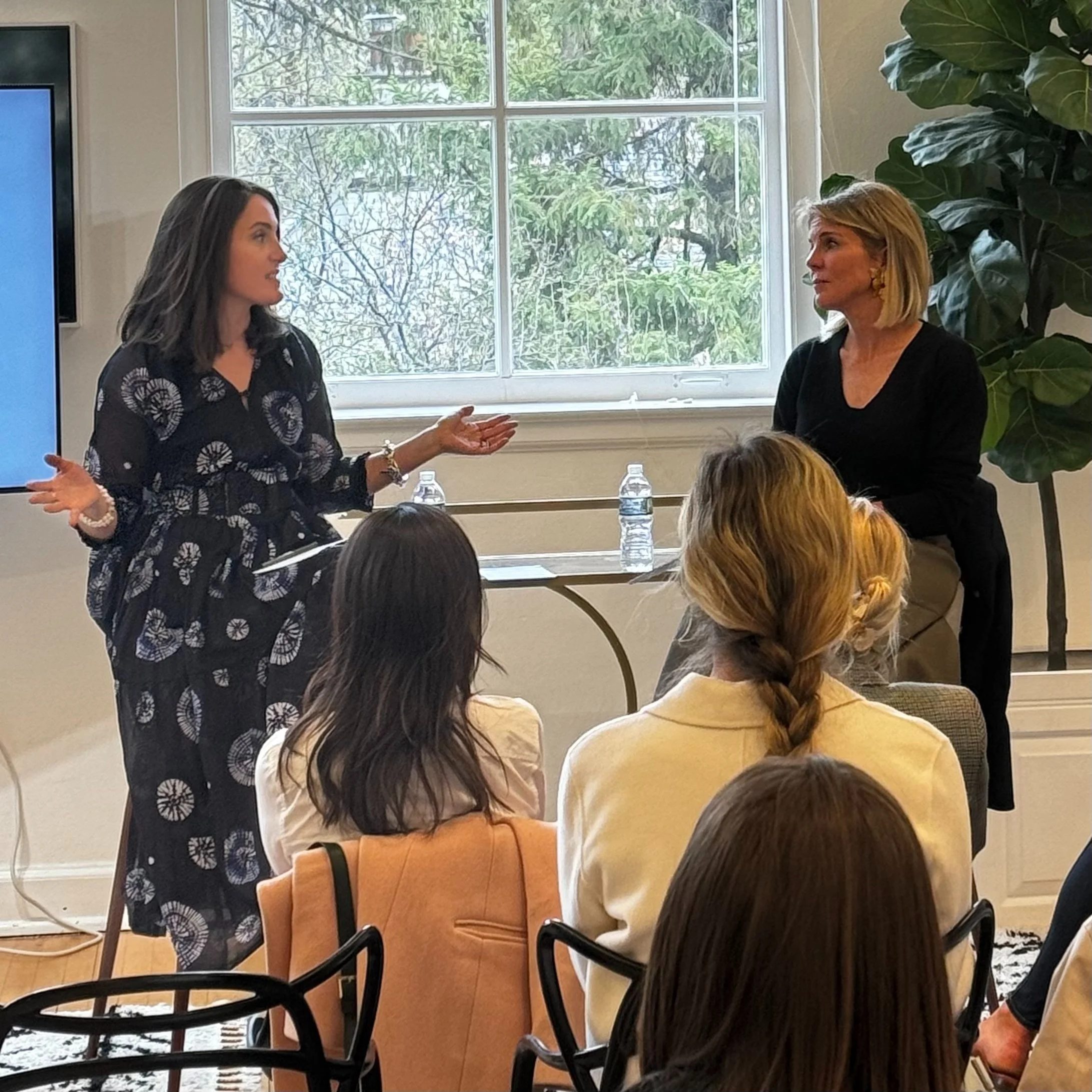
Brooke Skinner Ricketts, President & Co-Founder Beyond Barriers
April 24, 2024
Creating Beyond Barriers:
· Prior to turning 40, I spent most of my life in traditional corporate roles. For my 40th birthday I was given the gift of a reading from an amazing intuitive woman who told me, “You are not living in your power”.
· This hit home in that I had been focused on my succession plan at Cars.com, I was working towards the role of CEO, and throughout this process I realized that it might not be the job that I wanted after all. It was during a period of Covid-time soul searching that I realized it was time to do something more broadly purposeful with my life.
· My passion became focused on helping girls, women, and women of color. As my idea grew and became more defined, my wife Laura said, “I think you are going to have to build this” as we could not find anything quite similar at the time.
· We connected with our friends Nikki and Monica, who had created and were running Beyond Barriers as media company, spent some time together brainstorming and mapping out what we thought Beyond Barriers could be. It was electric and very exciting.
All About Beyond Barriers:
· Beyond Barriers (“BB”) is a career fitness platform, and it is called that because it develops and accelerates career skills that, much like skills in a fitness routine, require “exercise” to continue to grow and flex.
· BB is a year-long membership that kicks off with an accelerator program. You are assigned to a cohort and undergo a 12-week curriculum that consists of cohort meetings and coursework. BB is designed for busy professionals so participation is encouraged in the program and the coursework can be completed at your own pace.
· The curriculum includes clarity, courage, conviction, commitment, and community.
o Clarity might be the most challenging: What are your passions, who do you want to be? What do you want to be known for, and why?
o Courage is how you overcome limiting beliefs and imposter syndrome. Harvard Business Review conducted an objective study of equally performing similarly situated men and women, as asked subject to rate their performance. Women averaged a self-rating of 46%, Men averaged a 61% self-rating. So, whatever you are doing keep that in mind and give yourself a 15% raise.
· The value in the cohort group is that it allows you to come together with a group of similarly situated women and connect in ways that will give you insight, not just professionally but also personally.
· In the beginning of the program a confidence metric is measured, that is then re-measured during and at the completion of the program. Most people start in the 50s and end up in the 90s rage.
Communication:
· There is no set formula when it comes to communication strategies for clients and customers.
· Identifying your target audience – WHO you are looking to connect with is key. No one can be and influencer to everyone at once.
· Stick with what feels authentic to you – networking is a word that can make a lot of people uncomfortable, conjuring images of old white men drinking scotch in a dark room – but if you stick with networking with who you identify with as your community it will feel much more authentic.
· Social media is not everything, you can control how you connect, for example, maybe in-person is your preferred route. Think about the time you have, who you are trying to influence and why.
Negotiation:
· Women have strong negotiation skills – we use them every day in many different contexts.
· Women may not be as confident using those skills to negotiate around finances, salary, investments, and fundraising.
· It is proven then in the context of fundraising women tend to get more questions based on risk management and mitigation. Whether intentional or not it is an unconscious bias that exists, and it needs to be discussed.
· It is common saying that men are often valued on their potential while women are valued on their performance.
Mentoring:
· Collect as many mentors as you can, always be listening and learning. Try to get a seat at the table, or in the corner, just to listen and learn.
· When you ask someone to mentor you be very specific about your ask. For example, “I see that you are really good at X, and I have a specific need to learn more about “X”. If you can meet with me for 30 minutes a month to talk about this topic then I would be happy to also share information with you about “Y” - a topic that you are interested in or has value to you.
· Fearless asking is a good thing – but it takes practice. It is a muscle that needs to be exercised so practice it whenever you can in whatever networks are accessible to you that you feel comfortable in.
Recommendations:
· Beyond Barriers podcast, can be found on Apple Podcasts and is designed for ambitious women who want to develop skills to stand up and stand out in the workplace.
· Best Book on Negotiation, “Women Don’t Ask” by Linda Babcock (https://www.amazon.com/Women-Dont-Ask-Negotiation-Strategies/dp/0553383876) , and the follow-up title, “Ask For It – How Women Can Use the Power of Negotiation to Get What they Really Want”
· Recreation – Come see the Chicago Red Stars in the first-ever National Women’s Soccer League Exhibition Game on June 8th at Wrigley Field, where they will take on Bay FC.
· Eisenhower Matrix – This is a matrix that factors both importance and urgency that are plotted out to create a visual representation of where things fall so that you can prioritize. Once mapped, you can reallocate your time, identify tasks to delegate, and remove things form your list to do as well. It can be used individually or as a team.